
Where they are built
Every Hull on This Book Was Shaped by Hand in Bulukumba
The phinisi is built in Bulukumba, South Sulawesi — the historic home of the craft. Hulls are handcrafted by master shipwrights from sustainably sourced teak and ironwood, then fitted out, BKI-classified and safety-certified before delivery.
- South Sulawesi · where the hulls are built
- Bulukumba
- UNESCO inscription
- 2017
- Biro Klasifikasi Indonesia
- BKI
- Design to handover
- 5 stages
Quick answer
Hulls are handcrafted by master shipwrights in Bulukumba, South Sulawesi, from sustainably sourced teak and ironwood, then fitted out, classified by BKI and safety-certified before delivery.
- Naval architects lead every custom project from concept through construction drawings.
- Hull first, then decking, interior, then fittings — with a QA inspection at each stage.
- Build engagements are quoted per project rather than off a price list.
Yards are named during intake, not on a web page
This page names no individual shipyard and no shipwright. The previous version profiled eight yards by name, named five men as their directors, published a delivery count and a price premium for each, and carried a section alleging that unnamed yards had concealed hull defects. None of it was sourced. Yard selection is a conversation with the desk against your own specification — which is also how a broker who actually works with those yards would handle it.
The place
Why This Stretch of Coast, and Nowhere Else
Bulukumba Regency, on the southeast tip of South Sulawesi, is where phinisi shipbuilding is concentrated — Bira on the cape and Tana Beru along the coast. It is a working maritime district rather than a showcase: the drive between the villages passes hulls at every stage, from laid keels to planked but unrigged vessels to finished schooners waiting on delivery.
The craft belongs to the Bugis, Makassar and Konjo peoples of the region, and UNESCO inscribed it on the Representative List of the Intangible Cultural Heritage of Humanity in 2017. Local craftsmen are employed on every build, which is the practical form the heritage takes rather than a marketing line.
- Ironwood Structural
- The hull structure. Dense, and what gives a wooden phinisi a working life measured in decades rather than years.
- Teak Planking and joinery
- Planking and interior joinery. Sustainably sourced, and the material a buyer actually sees and touches.
- Marine-grade metals Fastenings and fittings
- Specified for saltwater service rather than adapted from general stock.
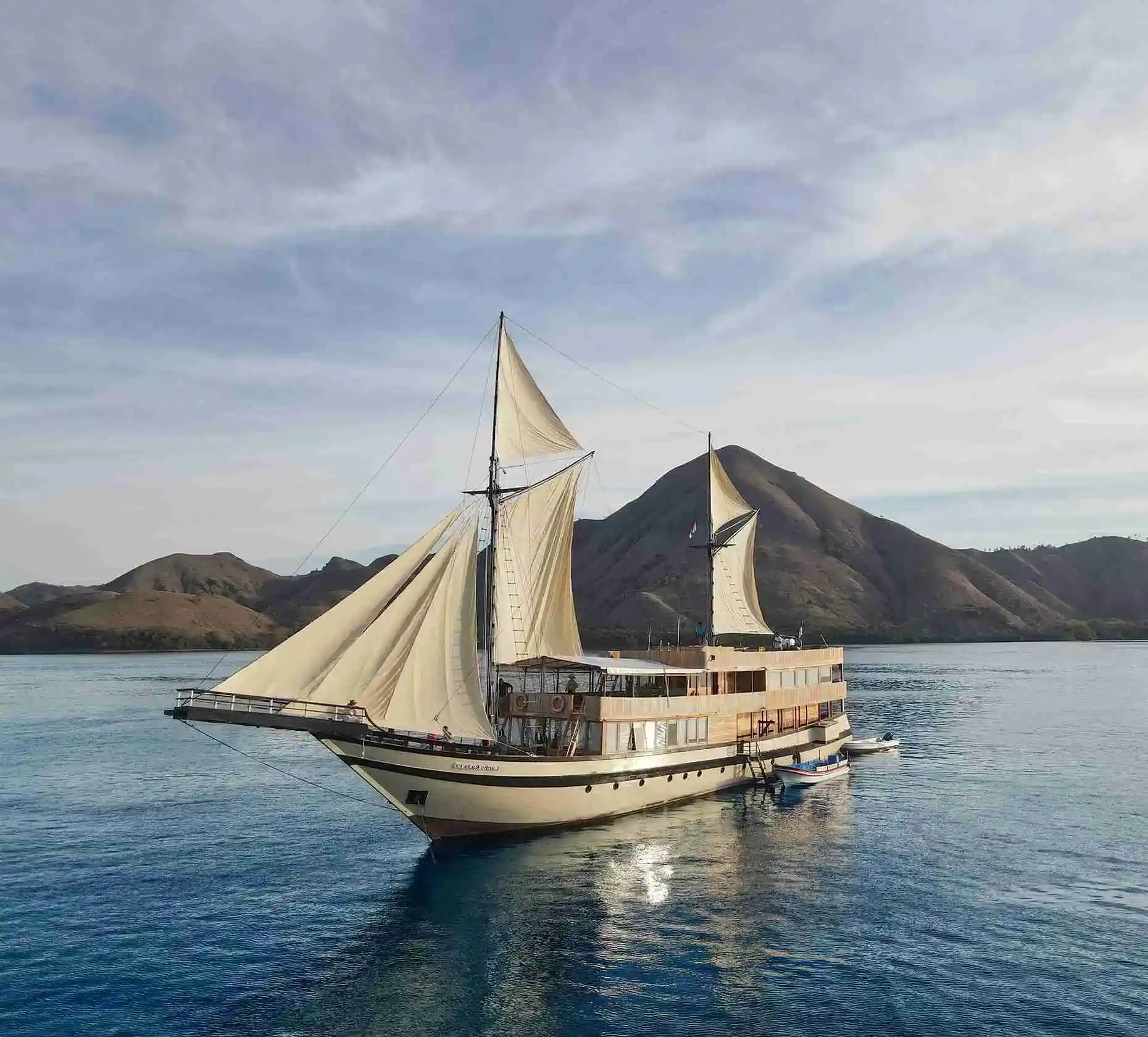
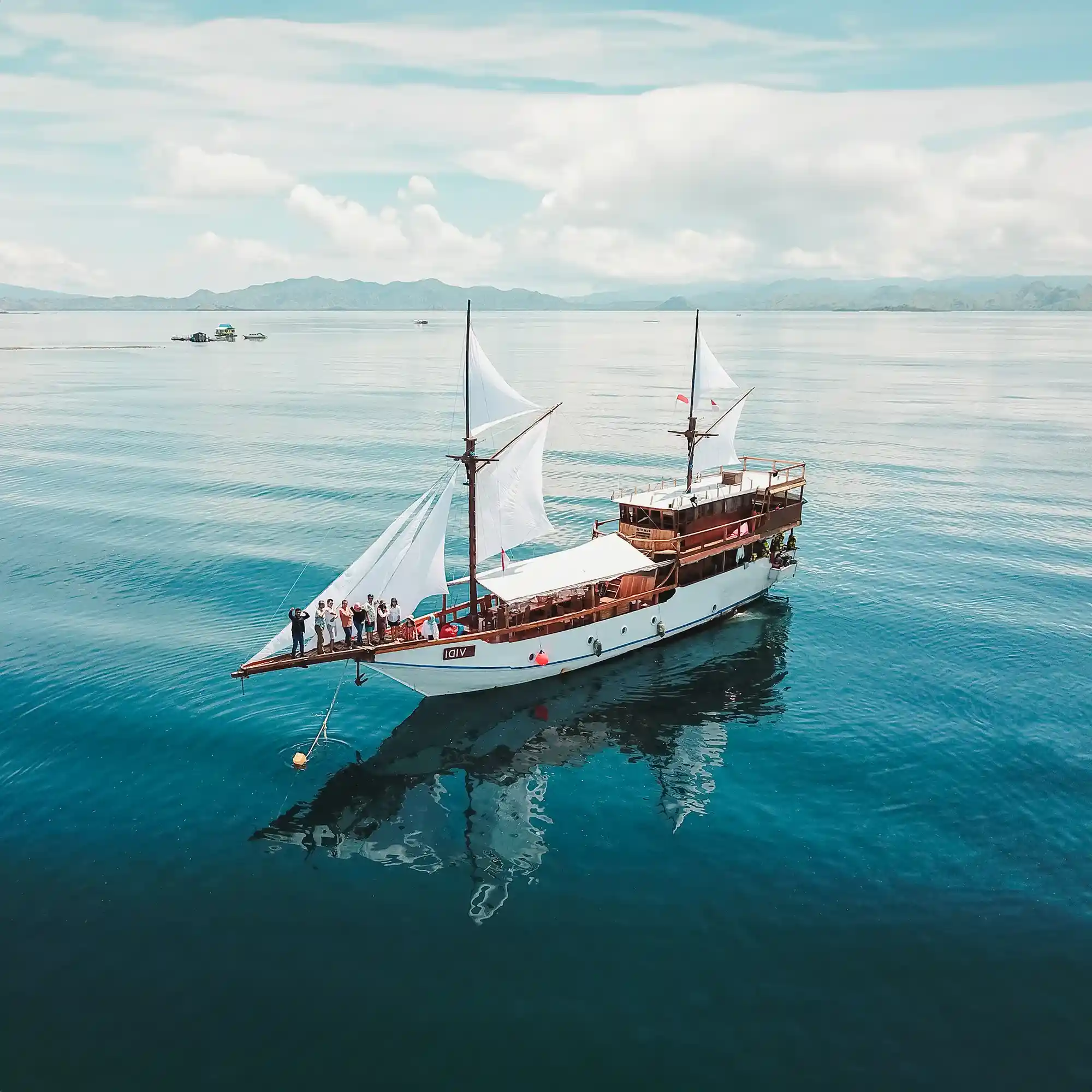
- Gaff schooner rig Two masts
- The silhouette. Sail-assisted operation is part of why a phinisi runs at a lower fuel cost than a pure motor vessel of the same length.
- Hand shaping Every plank
- Traditional technique combined with modern construction practice — which is what a BKI classification has to be satisfied against.
The build
Five Stages, Design to Handover
This is the published process, in order. Durations were removed: the previous version quoted build times per named yard with no source behind them, and a build engagement is quoted per project.
-
Naval architects lead
Design concept and consultation
Designers and naval architects work through the vision with you and carry it into construction drawings — traditional wooden aesthetic or a modern layout, refined stage by stage rather than fixed at the start.
-
Teak · ironwood · marine metals
Material selection
Sustainably sourced teak and ironwood, and marine-grade metals. This is the stage that decides whether the hull is a 30-year asset or a 15-year one, and it happens before a single plank is cut.
-
Bulukumba, South Sulawesi
Construction and build stages
Master shipwrights combine traditional technique with modern construction practice. The hull is built first, then the decking, then interior finishes, then the luxury fittings — in that order, because each stage closes access to the one before it.
This is the stage where on-site supervision earns its cost. Once joinery closes over a frame, nobody sees it again.
-
BKI classification
Quality assurance and certification
QA inspections at each build stage rather than one at the end. Classification by BKI — Biro Klasifikasi Indonesia — plus compliance against the applicable SOLAS requirements where the vessel type and voyage regime call for it, and the flag-state approvals.
Class and survey status is one of the four things that set a phinisi’s price, and it starts here.
-
Sea trials
Delivery and handover
Final inspection, then sea trials to test performance under sail and engine. The vessel is handed over with its documentation, certifications and warranties.
On the slipway
What a Hull Looks Like Before It Is a Yacht
Photographed at the Bulukumba yards. This is the same coast every vessel on our book came off.
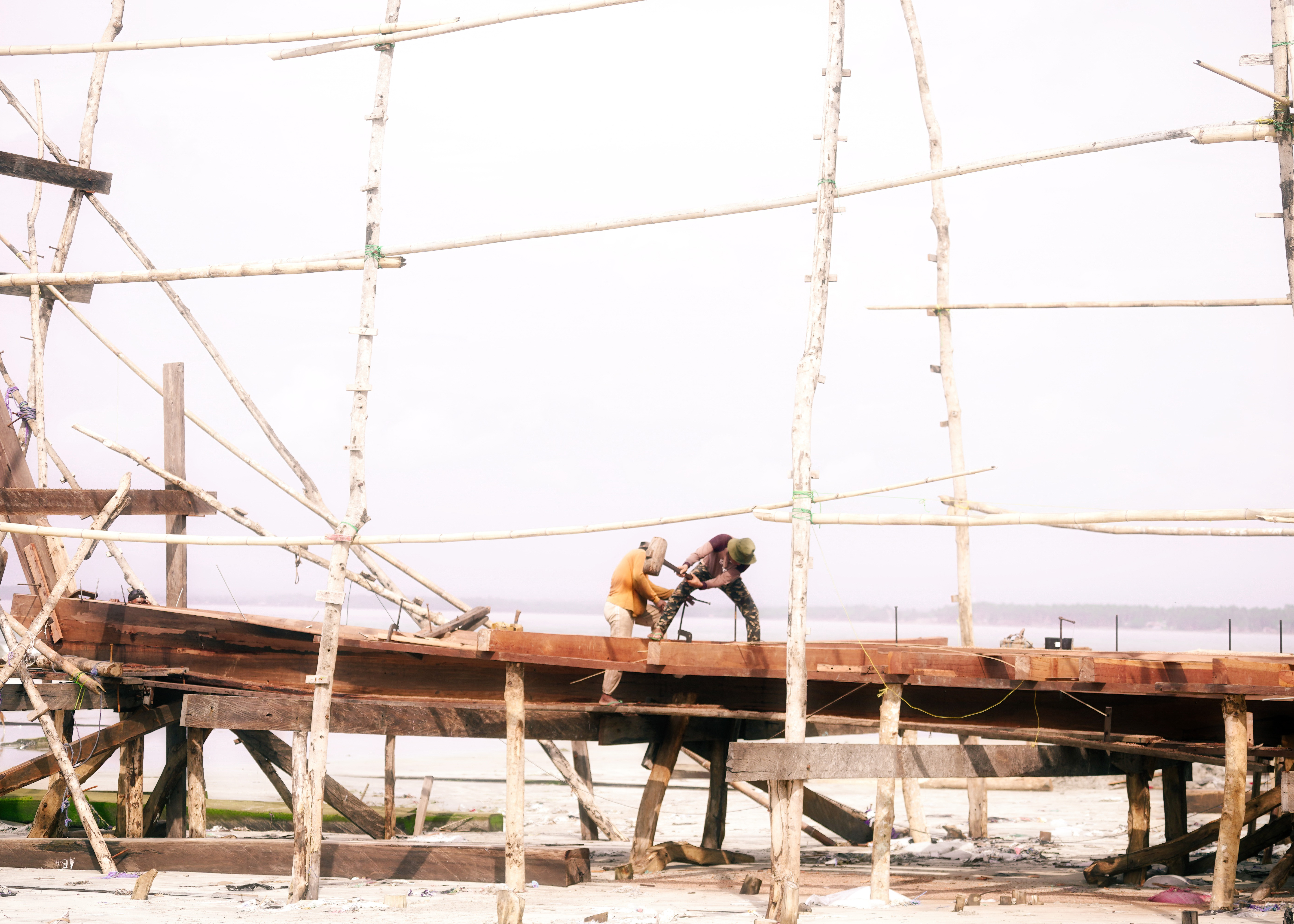
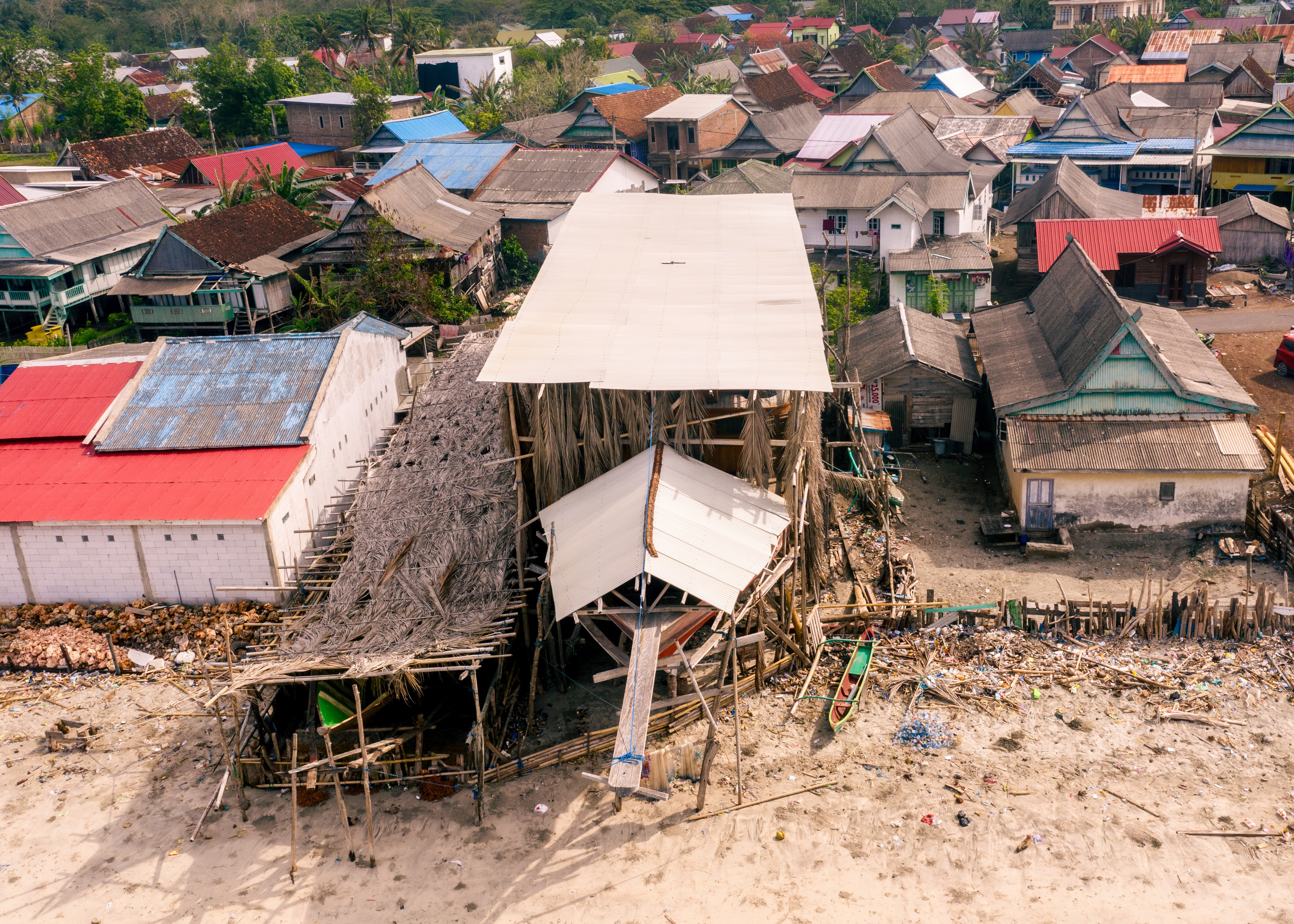
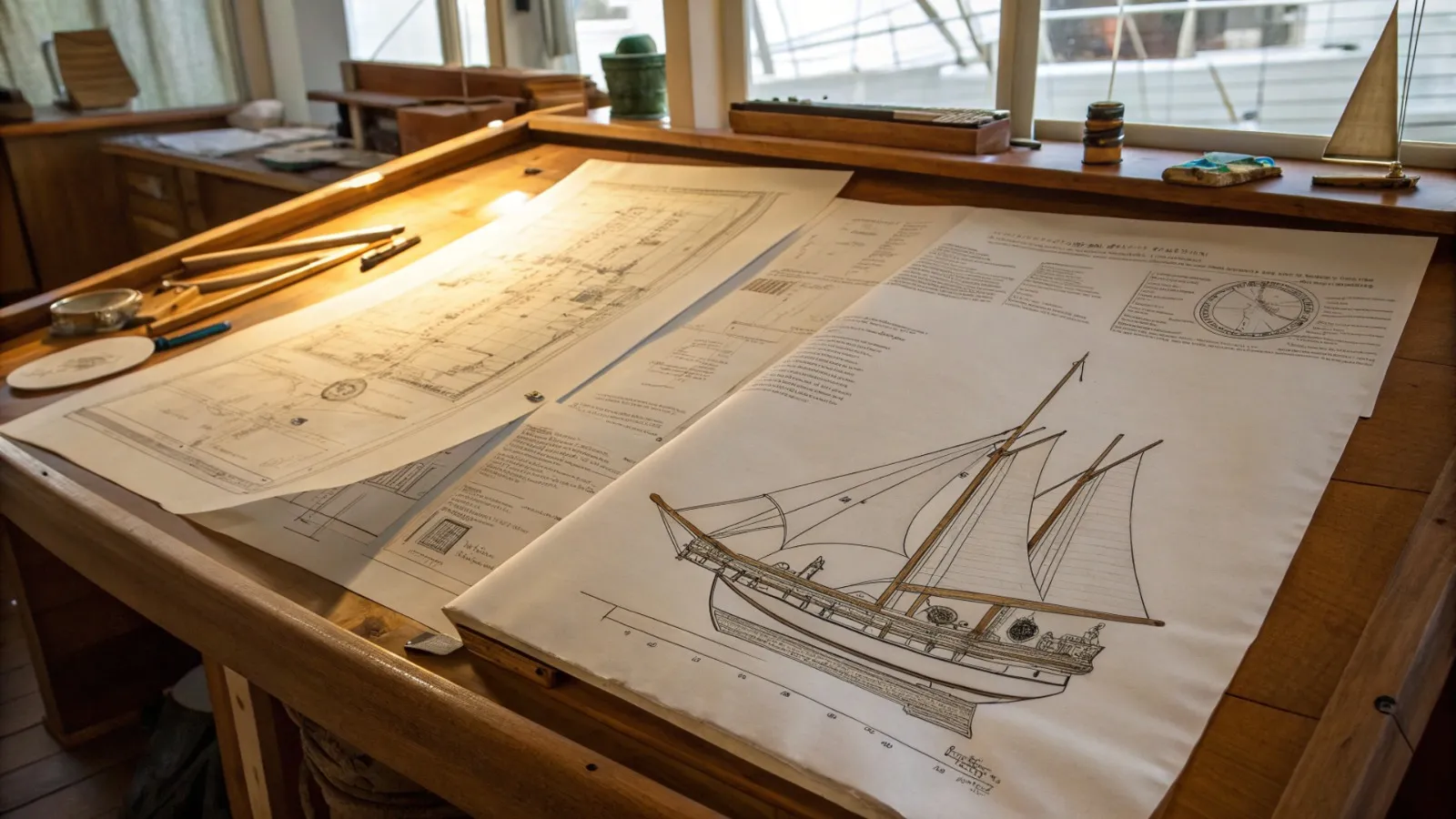
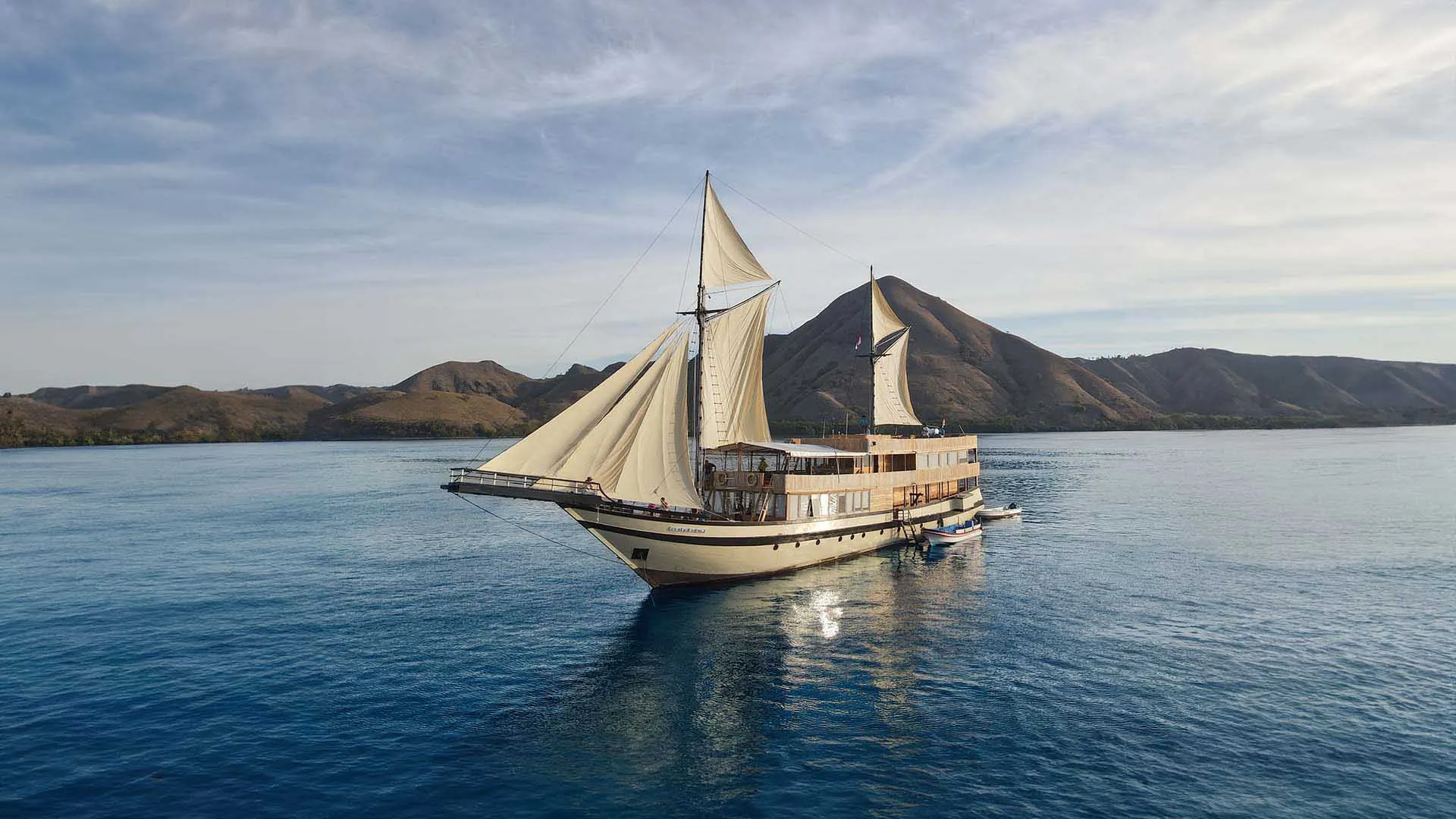
Photography from the group’s own yards and fleet.
Commissioning a build
What a New Build Asks of You
A build is a project you participate in, not a purchase you complete. These are the commitments that come with it.
- Required
A specification, decided early
Layout, rig, engine and cabin count are settled with the naval architects before construction drawings are finalised. Changing them later is the main source of schedule slip on any build.
Design stage
- Required
On-site supervision
Someone has to look at the hull while it is still open. Buyer-side supervision during the construction stage is the only point at which structure can be inspected before joinery closes over it.
Construction stage
- Required
Staged payment
A build spreads payment across its stages rather than asking for it at delivery — which is financing without a lender, and the reason a build can suit a buyer who would not take on debt.
Throughout
- Required
Classification
BKI classification and the applicable safety certification, obtained during the build rather than chased afterwards.
QA stage
- Conditional
Ownership structure in parallel
If the finished vessel will charter in Indonesia, the PT PMA and the flag registration run alongside the build rather than after it. The capital requirement is larger than four of the five vessels on our book.
If she will charter
- Conditional
Crew, before launch
A vessel needs certified crew from her first voyage, not from her first charter. Recruitment and certification are a lead time of their own.
Before handover
Build engagements are quoted per project. The previous version of this page published price premiums per named yard — 10–20% over market mean, 5–8% below, 8–12% below — with no source for any of them.
Next
The Craft, and the Commerce
Yard visit
Go and Stand in Front of One
Bulukumba is a working district and it is visitable. A day there tells a buyer more about build quality than any specification sheet, and the desk arranges the logistics and the introductions.
Or call +62 811-3941-4563
- Yard introductions made against your own specification
- Build engagements quoted per project
- No obligation and no fee to enquire