Updated: July 2026
Phinisi Boat For Sale is a curated Indonesia luxury tourism experience offered by Phinisi Boat For Sale: handpicked routes, vetted operators, transparent pricing, and 24/7 concierge support across Indonesia.
- What makes Phinisi Boat For Sale a premium experience.
- How Phinisi Boat For Sale curates exclusive access and concierge logistics.
- Routes, seasons, and pricing transparency — no hidden fees.
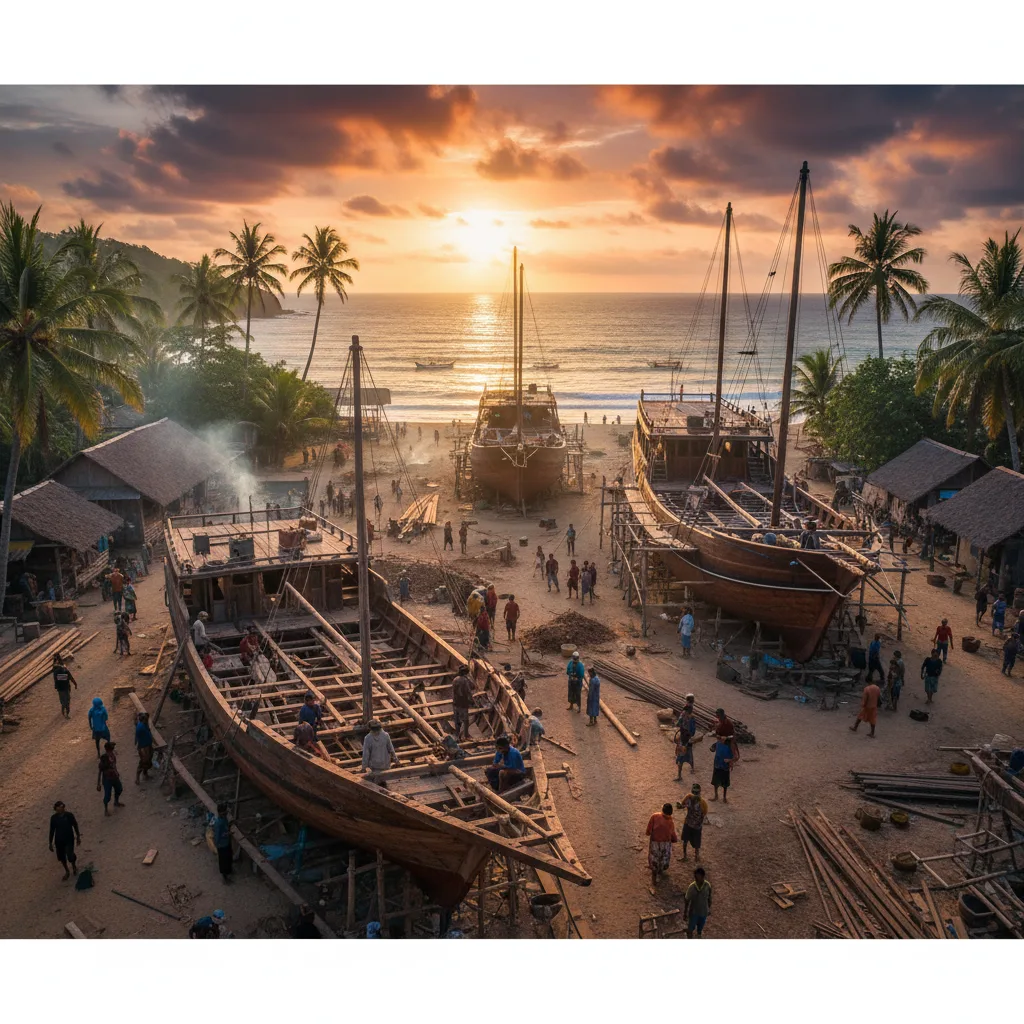
Phinisi Builders & Shipyards in Bira, South Sulawesi
Every great phinisi yacht starts in Bira and Tana Beru — the South Sulawesi coastal villages that have built ocean-going schooners since the 14th-century Mandar Kingdom. Here are the eight shipyards we vet, work with, and recommend.
Plan a Bira Visit See New Build Listings →Phinisi shipyards in Indonesia are concentrated in Bira and Tana Beru villages, South Sulawesi, where phinisi have been hand-built since the 14th century. Eight active shipyards we vet and recommend: Konjo Boatbuilders, Hadji Kalla Phinisi, Cv. Lambo, Bira Heritage, Tana Beru Maritim, Konjo II, Anugerah, and Ammana Gappa. UNESCO inscribed phinisi shipbuilding on Intangible Cultural Heritage list in 2017.
Why Bira and Tana Beru Are the Phinisi Capital
Phinisi (the spelling reflects the Konjo language; sometimes written “pinisi”) emerged in the 14th century as the working schooner of the Bugis-Makassar maritime empire. By the 17th century the Bugis controlled the Indonesian archipelago’s spice trade through Sulawesi-built phinisi running to the Banda Islands, the Maluku Spice Islands, and as far as Madagascar. UNESCO inscribed phinisi shipbuilding on the Representative List of the Intangible Cultural Heritage of Humanity in 2017 — Indonesia’s tenth UNESCO heritage inscription.
The craft is concentrated in two adjacent villages on the southeast tip of South Sulawesi: Bira (which sits on a white-sand cape facing east into the Flores Sea) and Tana Beru (10km inland, where most of the keel-laying work happens). A drive between the two villages reveals a rolling timeline of phinisi at every stage — laid keels, framed hulls, planked but unrigged vessels, and finished schooners ready for delivery. The atmosphere is that of a working maritime village, not a tourist showcase.
Konjo Boatbuilders
Founded by master craftsman Haji Saharuddin in 1985, Konjo Boatbuilders has delivered over 60 phinisi including some of the most photographed charter yachts in Indonesia. Specialty: ironwood-keel phinisi 38–55m with traditional gaff schooner rigs. Pricing: premium tier; expect 10–20% over market mean. Strengths: hull integrity, rig quality, after-sales support. Build time: 12–16 months for typical 45m commission.
Hadji Kalla Phinisi
A Tana Beru institution — three generations of master shipwrights, current yard director Haji Tarsa. Specialty: large phinisi 50–65m with luxury interior fit-out. Pricing: top of market; we route hospitality-group buyers here. Strengths: interior quality, customisation flexibility, English-speaking project management. Build time: 16–22 months.
Cv. Lambo (Pak Yusran)
Mid-tier specialist focused on operating-charter phinisi in the 38–48m range. Pricing: 5–8% below top-tier yards while maintaining strong build quality. Strengths: schedule reliability, charter-operator experience. Best for: charter fleets adding capacity at sensible cost.
Bira Heritage Phinisi
Boutique yard run by Pak Bahar — 8 phinisi delivered in last decade, all to international owners. Specialty: traditional spec phinisi (smaller engines, more sail area, 32–42m) for sailing purists. Pricing: bespoke; quote per project. Strengths: traditional rig knowledge, sailing performance.
Tana Beru Maritim
Cooperative of three master shipwrights specialising in refit and rebuild rather than ground-up new construction. Strengths: rerigging, replanking, deep mechanical refits. Best for: pre-owned phinisi acquisitions with refit reserve.
Konjo II Shipyard
Younger spinoff from the original Konjo lineage — same family, separate yard. More aggressive on price and timeline; slightly less proven on after-sales support. Best for: budget-conscious new builds 35–42m with experienced project management on buyer side.
Anugerah Phinisi
Tana Beru-based mid-tier yard. Quick turnaround on smaller commissions (32–38m phinisi). Pricing 8–12% below market mean. Best for: charter operators wanting quick fleet additions at sensible price.
Ammana Gappa
Newest yard in our network — opened 2019, run by university-trained naval architect Pak Iskandar combined with Bira master shipwrights. Specialty: phinisi with modernised interior layouts and non-traditional rig configurations (including hybrid-electric propulsion, the first such phinisi delivered in 2024). Best for: buyers wanting traditional aesthetic with modern systems.
How We Match Buyer to Yard
Our brokerage process begins with intake interview to understand priority weighting (timeline, budget, custom flexibility, after-sales). We then propose 2–3 yards that fit. Buyer-side project management is critical: we recommend on-site supervision visits every 6–8 weeks, photo updates weekly, and milestone-based payment release through Singapore escrow.
Yards We Avoid (And Why)
Two yards in the Bira region have delivered phinisi where buyer-broker relationships ended badly — over schedule slip, scope drift, or hull defect concealment. We have published their names privately to all our active buyers but withhold them publicly to avoid defamation risk. Ask us during your intake interview.
Speak With Our Brokerage Team
Two offices — Bali (Seminyak) and Labuan Bajo. Our team responds within 4 business hours, weekdays. Confidential consultation, no obligation.
The ancestral craft of phinisi building
The air in Bira hums with the rhythmic thud of mallets and the scent of freshly cut timber, a symphony that has echoed along these shores for centuries. Phinisi building is not merely a construction process; it is an inherited art form, passed down through generations of Bugis and Konjo master shipwrights. Unlike modern shipbuilding that relies on blueprints, phinisi construction traditionally begins with the keel, guided by an intuitive understanding of wood, water, and wind, deeply embedded in the builders’ collective memory. The primary materials are robust Indonesian hardwoods like ironwood (ulin) and teak, sourced meticulously from sustainable forests, often from Kalimantan or other parts of Sulawesi, ensuring both durability and a connection to the land.
Each plank and beam is chosen for its specific properties, then shaped and fitted by hand, the skill and patience of the craftsmen. The intricate joinery, often without a single nail in the hull’s primary structure, showcases an engineering marvel that predates contemporary methods. This deep respect for traditional techniques extends to the spiritual realm; builders often perform rituals and ceremonies, from the keel-laying to the launching, to bless the vessel and ensure its safe passage. The entire community often participates, reinforcing the cultural significance of each phinisi that slides into the turquoise waters.
The distinctive silhouette of a phinisi, with its two masts and seven sails, is not just aesthetically pleasing but also a highly efficient design, perfected over hundreds of years for archipelagic currents and winds. These vessels, capable of carrying significant cargo or providing luxurious comfort, are renowned for their exceptional seaworthiness, making them ideal for voyages across the vast Indonesian archipelago and beyond. This blend of ancient wisdom and practical design is what truly defines a phinisi, setting it apart as a timeless masterpiece of maritime heritage.
From raw timber to bespoke luxury yacht: a shipyard journey
Witnessing a phinisi emerge from raw timber to a gleaming luxury yacht is an extraordinary journey that blends ancient craft with modern sophistication. At the Bira shipyards, the construction begins with massive logs, some weighing several tons, which are carefully shaped into the keel, ribs, and planks. This foundational work, often taking 6 to 12 months for the hull alone, is where the structural integrity and graceful lines of the vessel are born. The sheer scale is impressive; a typical luxury phinisi can stretch over 40 meters (approximately 130 feet) in length, requiring immense skill to manage and manipulate the heavy timbers.
Once the traditional hull is complete, the process transitions to outfitting the interiors, transforming the sturdy wooden shell into a floating sanctuary of comfort and elegance. This is where the “phinisi boat for sale” truly comes alive as a luxury product. Modern phinisis feature bespoke designs tailored to the discerning traveler, incorporating en-suite cabins, state-of-the-art navigation systems, gourmet kitchens, dedicated dive centers, and expansive sundecks. Designers and engineers collaborate closely with the traditional builders, ensuring that contemporary amenities and safety standards are seamlessly integrated without compromising the vessel’s authentic character or structural integrity.
The customization options for a phinisi boat for sale are virtually limitless, allowing owners to infuse their personal style and preferences into every detail, from the choice of exotic timbers for interior finishes to the configuration of living spaces. This meticulous attention to both exterior heritage and interior luxury is what elevates a phinisi beyond a mere boat to a truly unique, handcrafted experience. It represents a living piece of Indonesian culture, reimagined for the ultimate in maritime indulgence and adventure.
The enduring legacy and future of phinisi luxury
The phinisi stands as a powerful symbol of Indonesia’s rich maritime heritage, the ingenuity and resilience of its seafaring communities. Its cultural significance was formally recognized in 2017 when UNESCO inscribed “Pinisi, Art of Boatbuilding in South Sulawesi” on its Representative List of the Intangible Cultural Heritage of Humanity, acknowledging the profound traditional knowledge and social practices associated with its construction. This recognition underscores the importance of preserving these ancient skills, which continue to thrive in active shipyards along the coast, adapting to modern demands while upholding centuries-old traditions.
The market for a phinisi boat for sale is increasingly global, attracting discerning buyers and luxury tourism operators who seek an authentic yet opulent experience. These vessels offer a unique platform for exploring Indonesia’s breathtaking islands, from the coral gardens of Raja Ampat to the Komodo Dragon-inhabited shores, providing an blend of adventure, privacy, and refined comfort. Many luxury phinisis also incorporate sustainable practices, utilizing responsibly sourced materials and implementing eco-friendly operational systems, aligning with the growing demand for conscious travel.
Looking ahead, the future of phinisi luxury lies in a harmonious balance between innovation and tradition. While the core building techniques remain steadfast, advancements in propulsion (including hybrid and electric options), navigation technology, and interior design continue to evolve. This ensures that each new phinisi boat for sale retains its soulful connection to the past while offering the ultimate in modern convenience and environmental responsibility, ready to its next grand voyage as a timeless icon of Indonesian craftsmanship. For more insights into Indonesia’s diverse offerings, visit indonesia.travel.
Related reading


