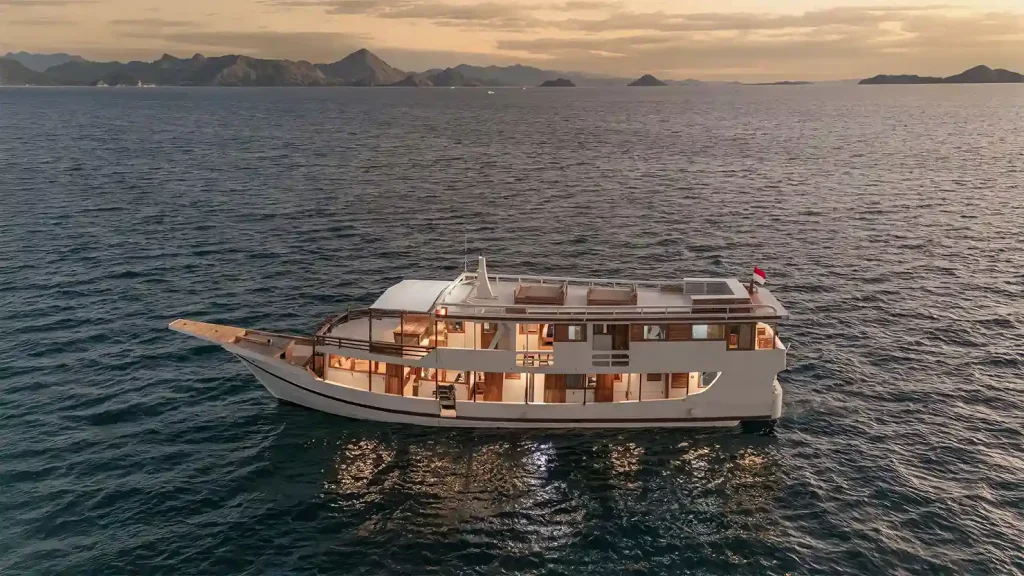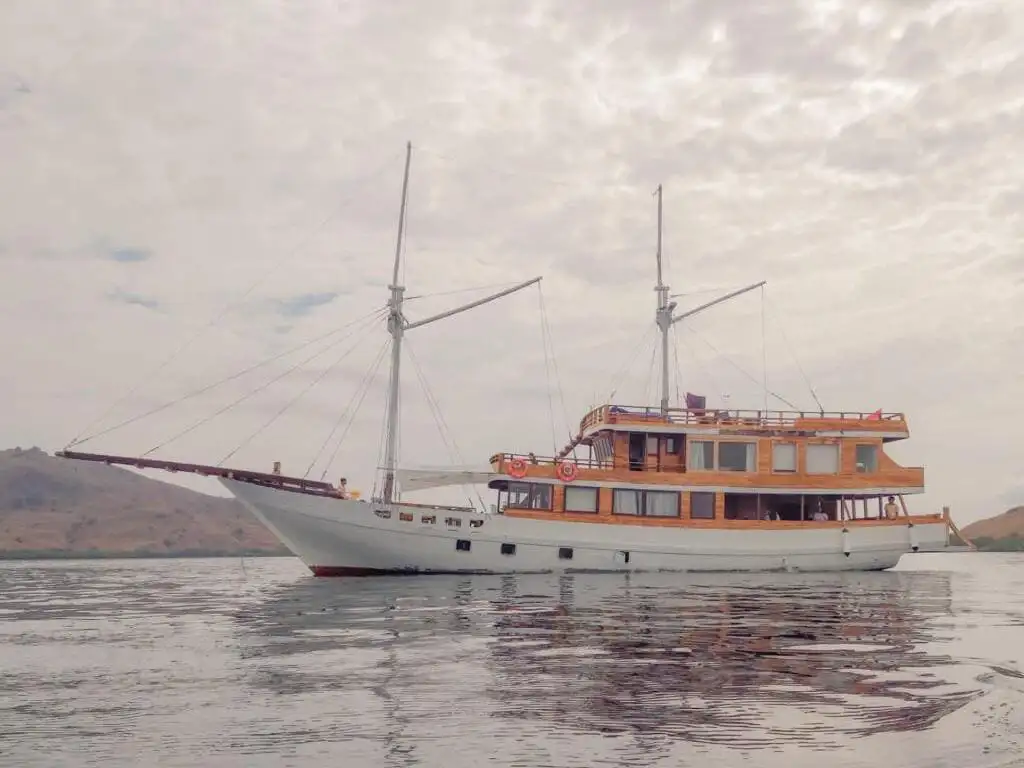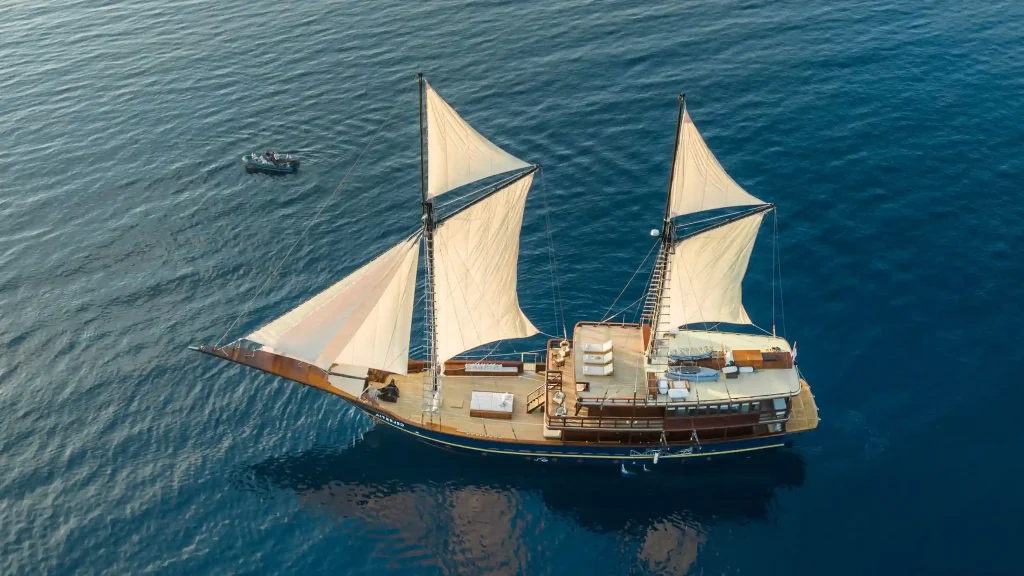
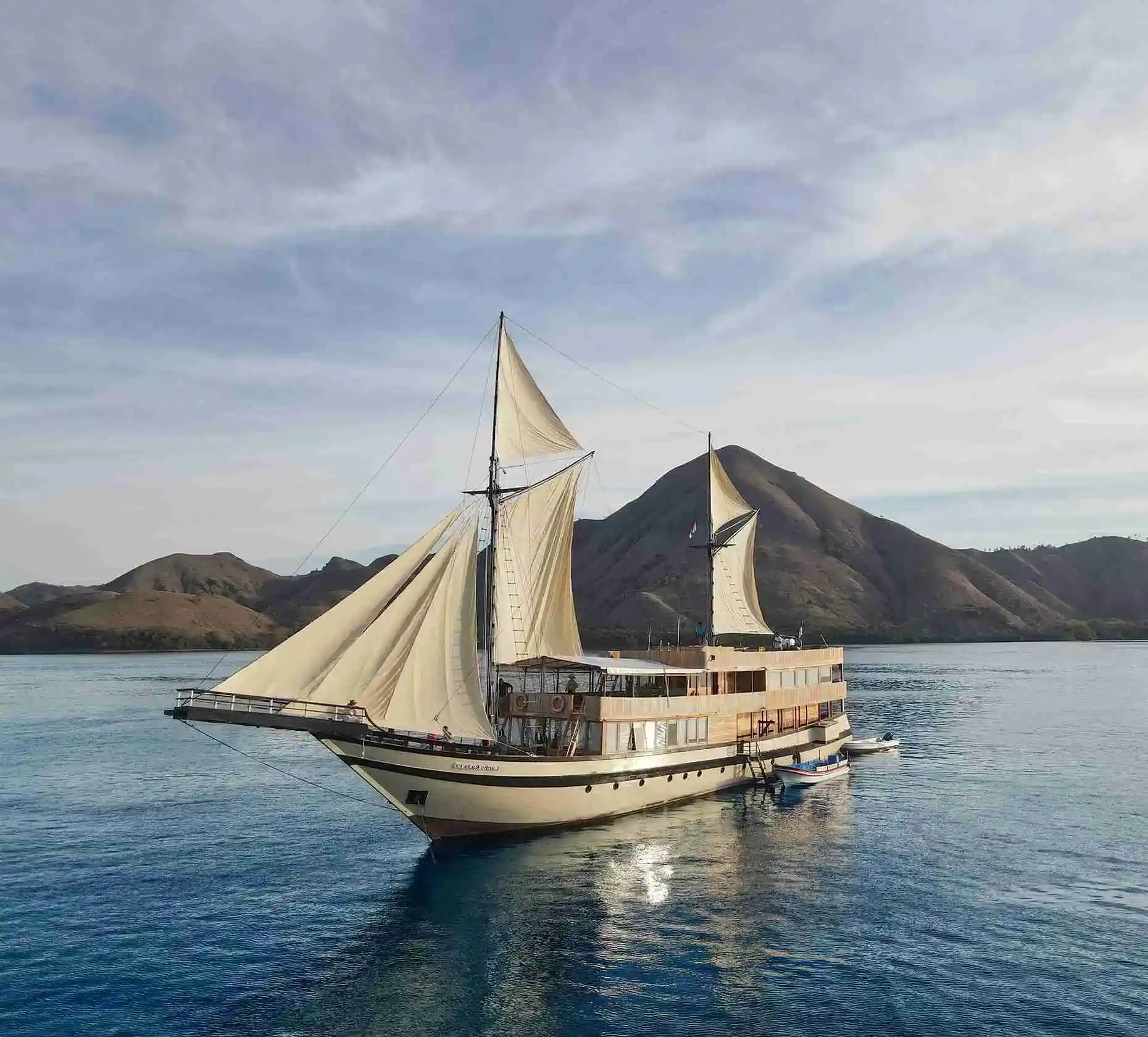
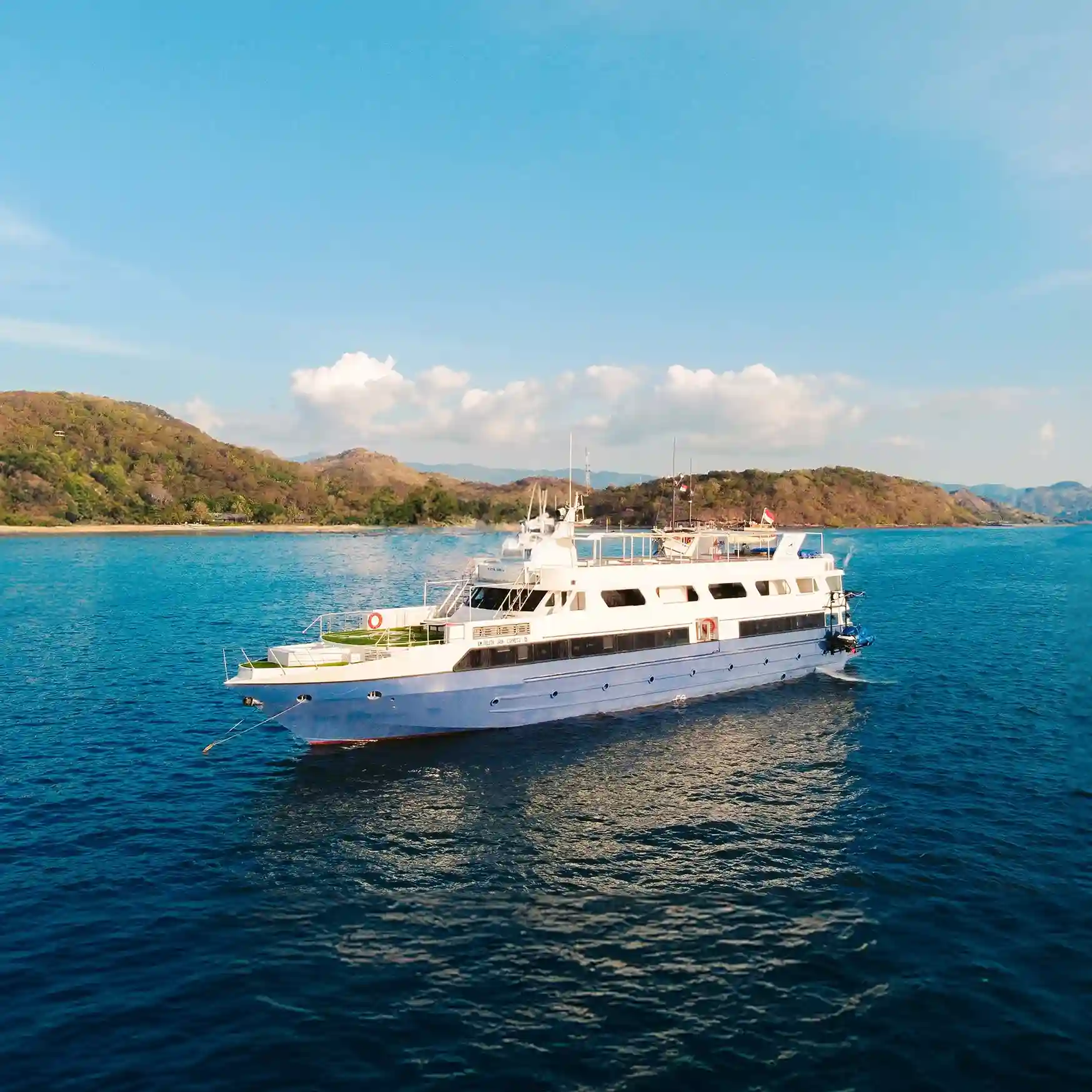
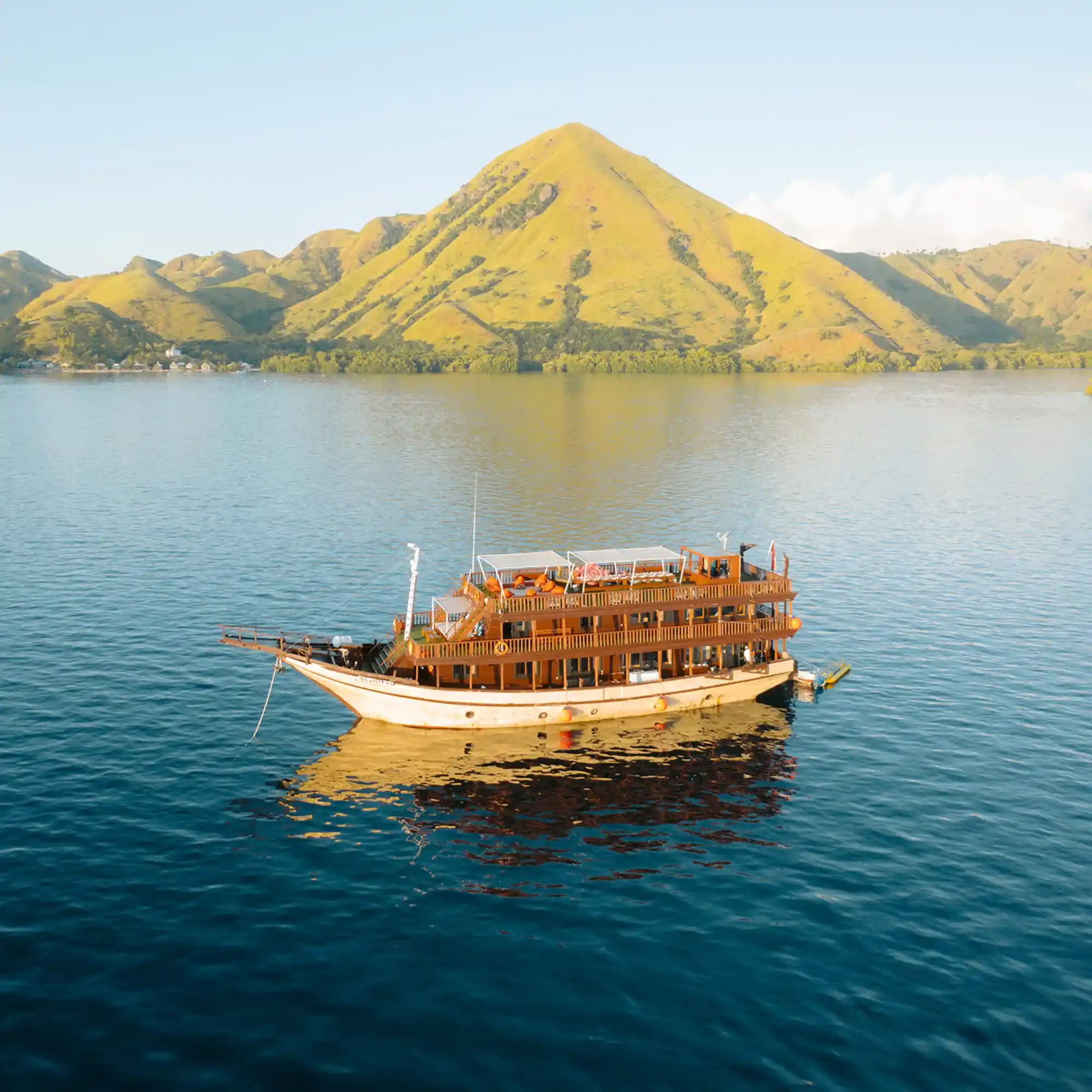
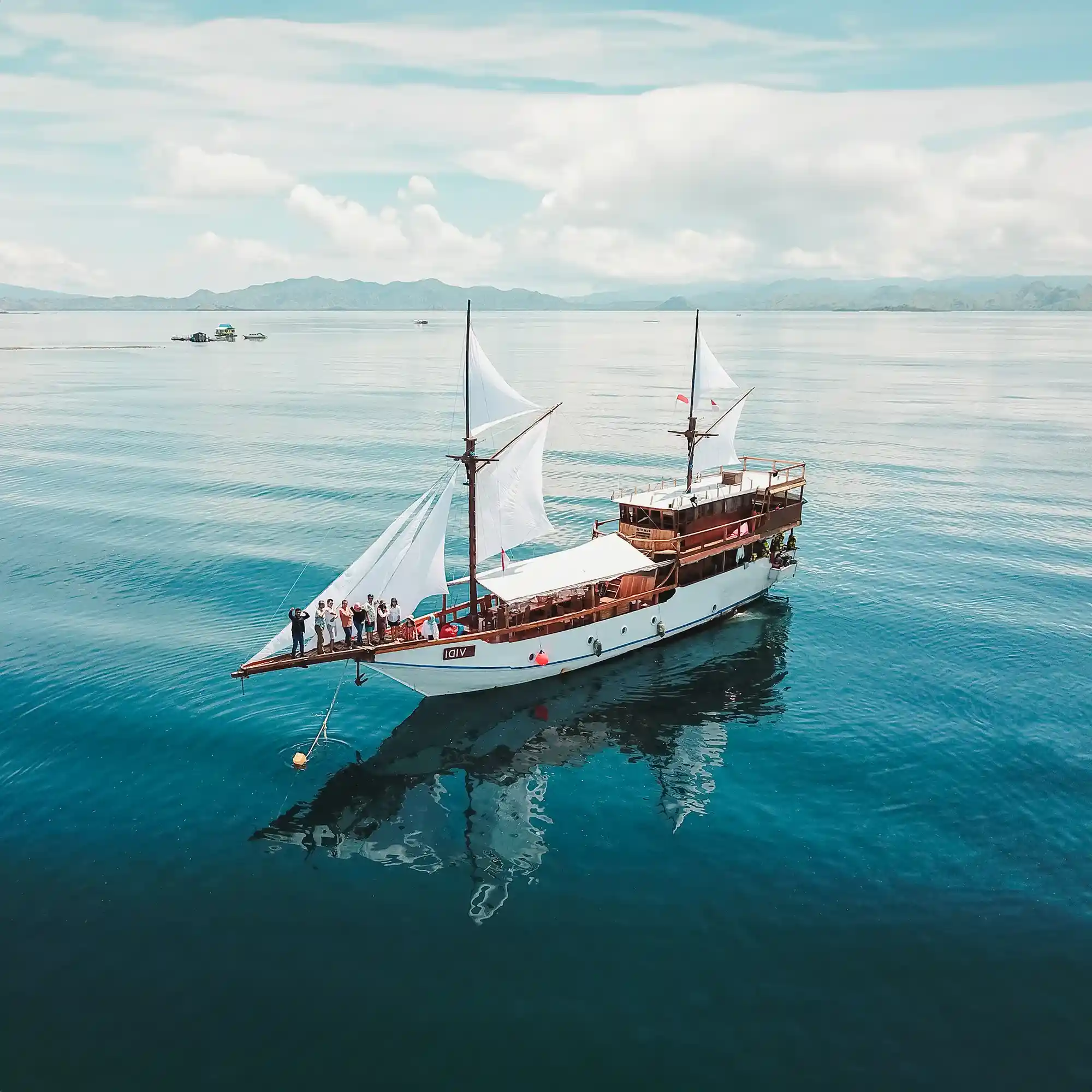
The 40-Metre Class: Flagship Phinisi Listings Compared
Updated: August 2026
The 40-metre flagship phinisi class means eight to nine cabins, sixteen to twenty-two crew, draft usually over three metres, and indicative asking prices from roughly USD 2,800,000 upward. It buys presence and comfort on passage. It also buys a narrow buyer pool, which makes documentation and condition decisive at resale.
What forty metres actually gives you
Three things, and they are real. First, sea-keeping: a long hull is markedly more comfortable on the open crossings between Bali, Komodo, Alor and Raja Ampat, and that comfort is the difference between guests enjoying a passage and enduring it. Second, volume: a proper master suite on the main deck, a tender garage rather than a tender parked on the sun deck, dedicated dive facilities, and crew accommodation that does not compromise the guest areas. Third, range, because tank capacity scales with hull volume.
What it does not give you is anchorage access. A hull drawing 3.2 metres or more must observe a meaningful number of shallow bays from further out, and itineraries have to be designed around depth — see draft and anchorage limits.
Typical specification
- Cabins: eight to nine, with a main-deck master; sixteen to eighteen guests.
- Crew: sixteen to twenty-two, including a dedicated engineering department.
- Machinery: a main engine commonly 700–1,000 hp or twin installation, two or three generators, watermaker, and full dive infrastructure.
- Tanks: fuel frequently 30,000 litres and above; fresh water 20,000 litres and above.
- Draft: commonly 3.0–3.8 metres loaded.
The economics are different, not simply larger
Crew is the dominant cost and it steps rather than scales. A twenty-two person crew needs supervision, rotation, training and accommodation, which turns vessel operation into personnel management. Fuel burn on passage is materially higher. Haul-outs need a yard that can physically take the hull, which limits where the vessel can be maintained and adds delivery time to every yard visit.
Against that, the achievable weekly charter rate at this size is considerably higher, and the guest profile is different. Flagship hulls compete with international charter yachts rather than with the local fleet, which means the standard expected of the crew, the cuisine and the presentation is higher too. Owners who buy a flagship and then run it on mid-size operating budgets get mid-size reviews.
Why resale is slower
The buyer pool at this level is small and international. A thirty-metre hull can be sold to a domestic operator, a regional charter company or a private owner; a forty-metre flagship is realistically sold to a handful of buyers worldwide in any given year. That has three consequences: marketing periods are longer, the documentation is scrutinised far more heavily, and condition matters disproportionately because the buyer has alternatives.
The practical implication for a purchaser is that you should buy a flagship intending to hold it. Modelling a three-year exit at this size is optimistic. See depreciation curves for how value behaves across a holding period.
Due diligence emphasis at this size
- Stability documentation. Large superstructures and upper-deck volume make the stability file more consequential — see cabin count vs stability.
- Certification for the intended trading area. Requirements are heavier and renewal is slower.
- Engineering department condition. Three generators, a large main engine and extensive auxiliary systems mean the machinery survey should be conducted by a specialist, not a generalist.
- Yard access. Confirm which yards can haul the hull and what that costs, before you own it.
- Crew continuity. Replacing a full flagship crew is a project in itself.
Who should buy in this class
Owners who cruise extensively and value comfort on passage above anchorage access; charter operators targeting the international high-end market with the shoreside organisation to support it; and buyers who intend to hold for a decade. Buyers seeking flexibility, quick resale or shallow-water access are consistently better served in the 30-metre band.
The shoreside organisation nobody budgets for
A flagship is not run from a phone. Provisioning for eighteen guests and twenty crew in remote eastern Indonesia, rotating crew through leave, moving spares to a vessel that may be four days from the nearest airport, and managing certification renewals all require a shoreside function. Owners who buy at this size and try to run the operation personally discover within one season that the vessel has become a job. Either budget for professional management or budget for your own time, but do not budget for neither, because the failure mode is visible to guests immediately.
Request the vessel dossier
Flagship dossiers include stability documentation status, yard access notes and full crew structure. WhatsApp +62 811-3941-4563 or write to [email protected]. All figures on this site are quoted in USD.
Frequently asked questions
How much does a 40-metre phinisi cost?
Indicative asking prices start around USD 2,800,000 and run substantially higher for recent builds with full certification and documented refit history. Specification variance at this size is wide enough that comparisons need to be made hull by hull.
How many crew does a 40m phinisi need?
Sixteen to twenty-two in normal service, including a dedicated engineering department. Crew is the dominant operating cost in this class and it steps up rather than scaling smoothly with length.
Is a flagship phinisi harder to sell later?
Yes. The buyer pool is small and international, marketing periods are longer, and documentation is scrutinised more heavily. Buy in this class intending to hold rather than modelling a short exit.
Can a 40-metre phinisi reach the same anchorages as a smaller hull?
Not all of them. With a loaded draft commonly above three metres, a meaningful number of shallow bays in Komodo and Raja Ampat require anchoring further out, so itineraries need to be planned around depth.
Phinisi Boat For Sale is a specialist maritime brand and digital platform under Juara Holding Group. Vessel-sale, construction, refit and repair contracts are issued by PT Komodo Galangan Nusantara. Brokerage, central agency and charter-marketing contracts are issued by PT Komodo Bahari Nusantara. Separate contracts, separate fees, separate ledgers.
Written and checked by the desk. Figures are dated at the point of writing — our editorial standards explains how, and what happens when something here turns out to be wrong.