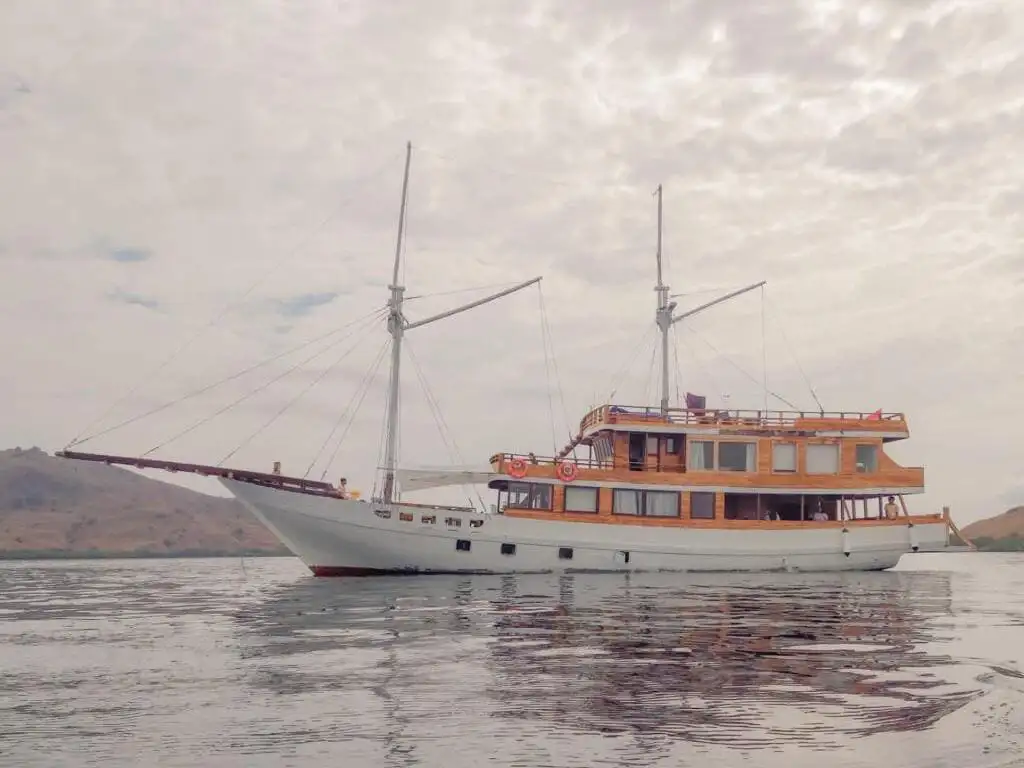




Listing Red Flags: Photos and Phrases That Warrant Questions

Updated: August 2026
A weak phinisi listing gives itself away before you ask a single question. The reliable tells are structural: no engine room photographs, no hauled-out hull shots, drone imagery only, no document set offered, and price language that moves before the survey does. None of these prove a bad vessel — each one tells you what to ask next.
What is missing matters more than what is shown
Any vessel can be photographed beautifully at golden hour from a drone. What distinguishes a serious listing is the unglamorous set: the engine room with the sound shields off, the bilge, the hull out of the water at the last haul-out, the crew quarters, the tank spaces, the switchboard. Those images are boring, and their absence is almost never accidental.
Ask for them explicitly. A seller with an organised vessel sends them within a day because they already exist from the last survey. A seller who has to arrange a haul-out to answer the question has told you when the hull was last inspected.
The photographic red flags
- Drone-only gallery. Wide aerial shots flatter every hull equally and reveal nothing about condition.
- No engine room. The most informative space aboard, and the most commonly omitted.
- No hauled-out shots. The underwater hull is where a timber vessel’s real condition lives.
- Interiors only at night. Warm lamplight hides staining, delamination and water damage that daylight exposes.
- Photographs of a different vessel. More common than it should be; check that deck layouts and hull details match across the gallery.
- Undated imagery. Ask when each set was taken. A 2019 gallery on a 2026 listing describes a vessel that no longer exists in that condition.
The verbal red flags
| Phrase | The question it should trigger |
|---|---|
| “Fully refitted” | Which yard, which year, which scope, and may I see the invoices? |
| “Turnkey, ready to charter” | Is the operating certificate current, and does it survive a change of ownership? |
| “Motivated seller” | Why now — and is there a mortgage or a dispute behind the timing? |
| “Engine recently serviced” | At what hour reading, by whom, and what was the scope? |
| “Papers being processed” | Which document is missing, and what is actually blocking it? |
That last row is the one to take most seriously. Documentation that is “in process” at the point of listing has a habit of remaining in process through the entire transaction, and it is the single most common cause of a stalled closing.
Structural red flags in the offer process
Watch how the seller handles the survey. Resistance to an independent surveyor, pressure to use a specific one, or reluctance to permit a haul-out are all substantive findings rather than personality quirks. So is a request for a large non-refundable deposit before survey. The normal sequence is offer, deposit into escrow, survey, then adjustment or withdrawal — set out in step-by-step escrow.
Red flags that are not red flags
Some things look alarming and are not. A long list of defects in a survey report is usually a sign of a thorough surveyor rather than a bad vessel. An older build year on a well-maintained hull is irrelevant. A vessel that has changed hands twice may simply have had two owners whose plans changed. Judge the file, not the anecdote — and see refit records review for how to test the claims that matter.
How to run the first conversation
Keep the opening exchange documentary rather than emotional. Ask for four things in one message: the general arrangement plan, the tonnage certificate, the last survey report, and dated engine room and haul-out photographs. Do not negotiate, do not indicate budget, and do not travel to view. The response to that single message sorts the market faster than weeks of viewings, because a seller with an organised vessel answers it in a day from files that already exist, while a seller without one begins explaining why the documents are unnecessary at this stage. That explanation is the finding.
Request the vessel dossier
Ask us for the engine room, bilge and haul-out photographs on any listing — if they do not exist, we say so. WhatsApp +62 811-3941-4563 or write to [email protected]. All figures on this site are quoted in USD.
Frequently asked questions
What photographs should a serious phinisi listing include?
Engine room with shields removed, bilge spaces, the hull hauled out, crew quarters, tank spaces and the switchboard, alongside the usual interior and exterior imagery. The unglamorous set is the informative one.
Is a long survey defect list a reason to walk away?
Usually not. A detailed defect list generally indicates a thorough surveyor. What matters is the total cost of the list and whether the items are maintenance or structural. Structural findings on a timber hull deserve far more weight than a long list of small items.
Should I pay a deposit before survey?
A deposit is normal, but it should sit in escrow and be refundable if the survey is unsatisfactory. A demand for a large non-refundable payment before any inspection is a structural warning about the transaction rather than the vessel.
What does ‘papers being processed’ usually mean?
Most often that a document such as an updated tonnage certificate, an operating certificate renewal, or a mortgage discharge is outstanding. Ask precisely which document, who holds it, and what is blocking it, because this is the most common cause of a stalled closing.
Phinisi Boat For Sale is a specialist maritime brand and digital platform under Juara Holding Group. Vessel-sale, construction, refit and repair contracts are issued by PT Komodo Galangan Nusantara. Brokerage, central agency and charter-marketing contracts are issued by PT Komodo Bahari Nusantara. Separate contracts, separate fees, separate ledgers.
You may also like

Written and checked by the desk. Figures are dated at the point of writing — our editorial standards explains how, and what happens when something here turns out to be wrong.